
矛盾(máodùn): Contradiction
On extremes in China, truth, tolerance, hyperinflation, and living in the space between

Xinhua Dictionary Definition:
矛和盾,比喻言行自相抵触
矛盾百出辩证法上指客观事物和人类思维内部各个对立面之间互相依赖又互相排斥的关系
矛盾的普遍性
Maodun 矛盾 is a literal conjoining of mao 矛, meaning spear, and dun 盾, meaning shield. When these two opposites are squeezed together in a two-character phrase, the conjoined word maodun means contradiction.
Cold War historian Arne Westad once told me, “China is a land of contradictions.” Some are definitely easy to point out: Communism and capitalism, the urban and the rural, the coastal and the inland, the north and the south, the masses and the center, shiny new infrastructure and massive local debt. Others are a little more subtle, like anti-imperialism and empire, Western animosity and worship, victimization and chauvinism, pluralism and racism, commodity and authenticity.
No wonder that one of Chairman Mao’s most famous essays is “On Contradiction” 矛盾论. In this short companion piece to “On Practice” 实践论, he declares that everything in the universe is in a constant state of contradiction. He urged his followers to immerse themselves in both sides of each contradiction. Only through this practice could one actually grasp the ultimate truths of the world.
One of the founders of the Chinese Communist Party, Shen Dehong, thinking similarly to the great helmsman, chose to write under the pen name Mao Dun 茅盾 to pay homage to this contradictory nature of communist revolution. Today, the Mao Dun literature prize is one of the most prestigious awards that contemporary Chinese authors receive.
With all this historical, literary, and cultural resonance throughout China to both insiders and outsiders, contradiction is a big word to unpack. I start with its origin.
Contradiction as Extremes
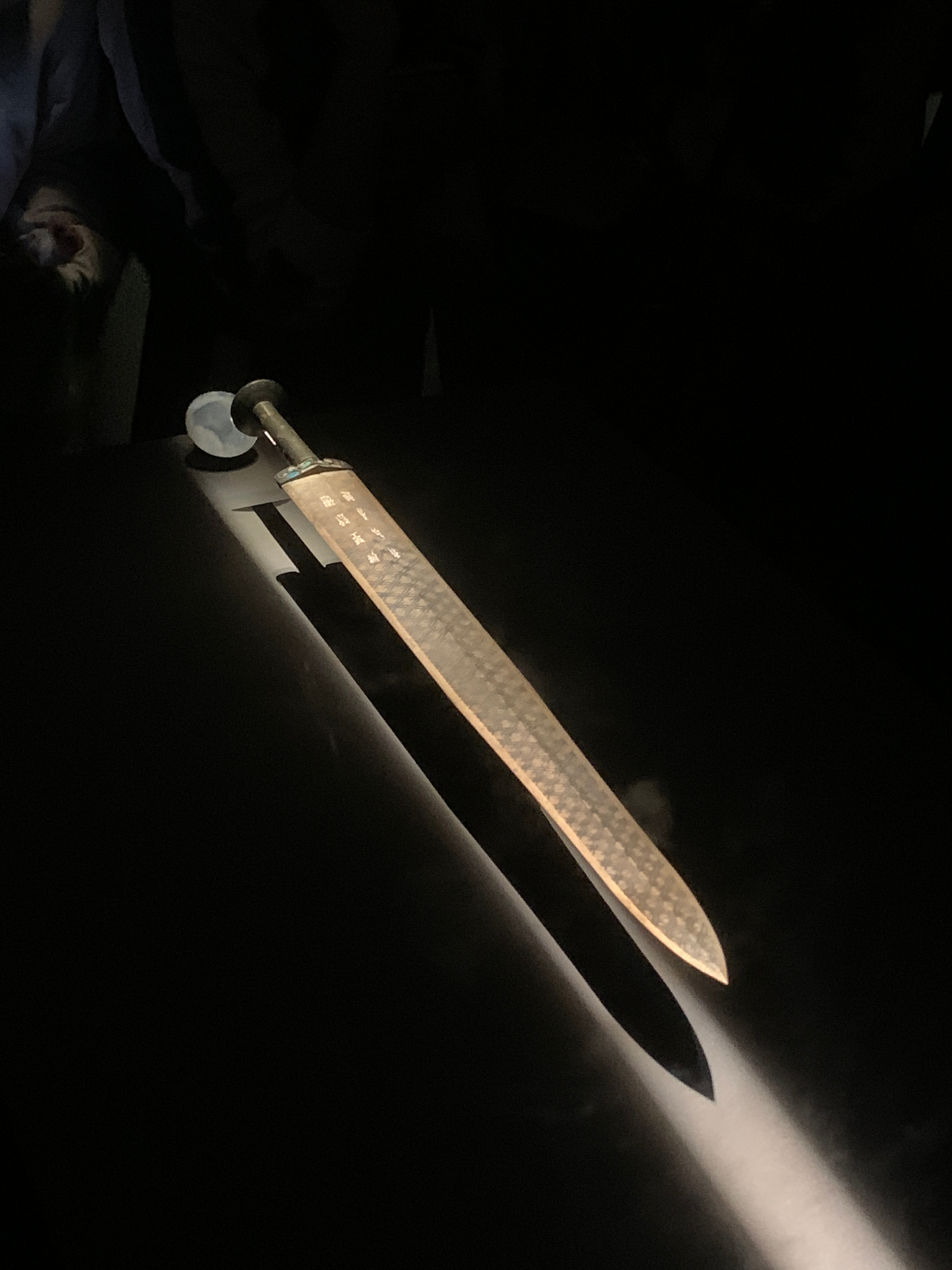
The phrase maodun itself is a literary allusion to a story within the Han Feizi 韩非子. A street merchant was selling his military wares to passersby, which included both a spear and a shield. The spear, he loudly proclaimed, was sharp enough to pierce through any shield. The shield, he declared, was strong enough to blunt any spear. A curious onlooker raised his hand and asked the merchant, “Then what would happen if you tested the spear against the shield?” Abashed, the merchant was left speechless.
Inherent in its paradigm, contradiction always comes as a pair: two extremes, two ideas, two objects that face off in some inborn manner like fighters in the ring.
This is at least how Mao liked to see things: Although everything in the universe is in constant tension, there is only one “right side” to every contradiction. This view went beyond just politics and the military, seeping into Maoist science as well.
In line with Soviet statistics and the man-over-nature, “high-modernist” Marxist rationalism, Chinese Communist statistics took exhaustive, complete enumeration and certain fundamental truth as its gospel. These views were naturally built off of 20s-era science, with its art deco, racial science, social engineering, supremacy-of-rationalization trappings. The full quantification and recording of all aspects of objects, peoples, societies, or environments then allows the leaders within the state to fully bend space and time to our will and precisely engineer their futures.
But contradictions in nature aren’t fighting matches where one side conquers and the other is vanquished, like we can set up in labs or on TV. They’re messy flows on a disjoint, multidimensional spectrum where sides mesh and fold into each other, growing and changing.
This naive belief in the absolute led Chinese state planners to attempt to impose dangerously simplifying rationalization on complex, irrational systems at a mass scale (e.g. The Great Leap Forward). Due to the firm belief in Marxist methods and the quantification of all unknowns, Chinese statisticians rejected contemporaneously novel methods like random sampling and the representativeness of the arithmetic mean that would have helped model more complexity at scale into their socio-economic plans. Chinese statistical yearbooks and the extreme fixation on specific numerical figures in government initiatives shows some this science’s legacy today. As a result, the Great Leap was a time of junk data and surveys en masse, overwhelming both administrative capacity to collect such data and analytical tools to process the results.
The simplifying of complex problems to clumsy extremes always will be popular, because it offers clean binaries to pick and choose between:
One pair of extremes that has been recently reappearing in social media is US-China influencers making posts about “freedom in the USA vs freedom in China.” I link two popular examples below:
As the claim goes, they state that while “freedom” in the US means freedom of speech, of religion, of action, and of the individual, Chinese people think of “freedom” as more akin to stability or security, a “freedom from fear” and “freedom from hunger.”
This is extremely deceptive. First and simply, there’s the false dichotomy that is individual freedom and wider stability (which has its roots in Chinese statist thought). Individual freedom, stability, and security can coexist: Some might argue they can be correlated. Frankly, just look at social stability and internet freedom in many non-US democracies.


Further, these ideas aren’t endogenous to the East and the West. In both intellectual traditions, you can find examples of the championing of the individual and its free capacity (be it Chinese anarchism or Chan Buddhism), and in both intellectual traditions you can find the argument for the supremacy of order and the organizing state (think Carl Schmitt on sovereignty and Han Feizi on Fa and Shu).
For many reasons you can criticize the current liberal democratic idea of freedom as “not truly free” with wealth and social inequalities baked into our histories. But, in the same breath, you can also criticize the “stability as freedom” argument as instead a sort of brinksmanship where fear of speech and instability is also a kind of fear in itself, a shackle to the supposed freedom you are claiming.
This dichotomy is not a binary between extremes, where one country fits nicely into one bucket and the other country fits nicely into the other. Contradiction, unlike as depicted in Maoism, is not a pseudo-Zoroastrian battle of good versus evil where we are figuring out which side is ultimate good and which side is ultimate evil.
This lack of nuance only feeds the social media algorithm as increasing numbers of foreign influencers make their “China trip.” Bad takes on a kind of Chinese utopianism have proliferated: Isn’t it crazy how good Chinese healthcare is? A post on r/economy with 7k upvotes: I can walk into a Chinese hospital and get a MRI scan for 70 USD. There are no homeless or poor in China! I can take an Uber in a Maybach for 60 USD!
The problem is that there’s differences: I feel like I have to point to the obvious points like the differences in lived experiences between the urban and the rural, income gaps, and the especially the foreign tourist versus native lens.
The pure purchasing power of most of the country, even city-dwellers, isn’t enough to just brush off 500 RMB MRIs and 420 RMB 5 minute Ubers in Maybachs. Like the US, China is also undergoing a K-shaped economic transition, with last drops of consumption being squeezed out of the top earners while the middle and lower class have to tighten their belts in a slowing economy with fewer opportunities.
But this is precisely the tension of learning about China: There’s a frustratingly muddy middle ground to be found between worshipping China as a paragon of investment-led growth that can implement 1 to N innovations at lightning pace and China as a dangerous and nationalist world power that intentionally sacrifices people, historical trauma, and rule of law on the altar of the state.
China has many aspects to admire: Yuen Yuen Ang once put it as an “autocracy with democratic characteristics.” Some of these democratic characteristics are nothing to scoff at. Deliberative and consultative institutions, wariness of business interests, as well as incentive structures to align official policy implementation with social progress seem sorely needed in a place where many feel that things have generally “enshittified,” rule of law is being stretched, and life is becoming increasingly unaffordable.
Not to mention that markets have concentrated under lax regulation and debt spending has gone into short-term juicing wealthy pockets and an increasingly unsustainable older generation rather than long-term production-raising construction, it’s clear why China’s statist, “engineering” society would hold broad appeal over America’s bureaucratic, “lawyerly” stagnation. As many netizens comment about the “China-maxxing,” it’s not about loving China as much as reflecting on the deep flaws in America.
However, like the contrast between Olympians Eileen Gu, co-opted as an emblem a Chinese-American returning to her roots, and Alysa Liu, whose father couldn’t attend her performance in the 2022 Beijing Olympics, China glaze conveniently elides over much of the painful history, politics, and nuance, leading to simplified narrative telling and just pure ignorance that actively obfuscate reality.
As much as Chinese domestic state media revolves around promoting government achievements, deep-rooted civilization and picturesque tourist locations, so much of American media is about criticizing America: Exposing the ugly sides of US politics and society for the problematic, messy conflicts they truly are.
Tolerance and the Middle Ground
Hu Shih, one of the greatest Chinese intellectuals of the 20th century, wrote a famous (or infamous if you’re Mao) essay criticizing intellectuals for focusing too much on “ideology” rather than solutions to current problems. Ideology is too rigid and unyielding: Once you declare yourself an ideologue, you circumscribe yourself within a set of abstract ideals that are specific to time and circumstance and aren’t practical to real actions. Instead, he argues for analyzing questions and possible tools to solve them. Rather than inspire and lead, big picture ideologies follow in the wake of solutions.
Hu more explicitly writes about exploring and living in the space between ideological extremes in his essay Tolerance and Freedom (容忍与自由), published while under martial law Taiwan in 1959.
As a young Republican during the May Fourth movement, Hu Shih famously advocated for freedom 自由. However, Hu Shih writes that as he has aged, he has realized tolerance and freedom are two sides of the same coin.
In fact, he claims tolerance is more important than freedom itself.
Freedom means the willingness and the ability of free speech and the free flow of information, even if those positions diverge from your own. This free market (if free and useful for a broad range of people) in turn naturally selects out the winners from the whole range of information for the improvement of the majority, like the so-called “selectorate theory” in political science. This only can work because of the toleration of a wide variance of views, and the acceptance of others’ freedom to put them forth. Only with tolerance can freedom exist.
Only with tolerance can freedom exist.
This ideal of tolerance, of a suffering scholar-warrior, expectedly holds very Confucian roots, being reflected in the so-called “Four Social Bonds” (礼义廉耻) or “Four Virtues” of Confucianism.
Li 礼 is a sense of propriety and a rules-regulated attitude. Yi 义 is a sense of righteousness and proper conduct. Lian 廉 is a sense of honesty and transparent judgement. Most importantly, Chi 耻 is a sense of shame or humility.
This Chi isn’t just the humility we think of Biblical qualities, rather, this sense of shame is an active utilization of failure to empower and better oneself, with the expectation of ultimate reward: Enduring temporary humiliation to achieve success.
I’ve already briefly discussed in a previous post how the idea of kumen or “bitter suffering” pervades a lot of modern Chinese intellectual thought and views on masculinity.

Tolerance plays off of that glorification of self-actualized national pain for something much more personal. Tolerance is also projected onto the body through the experience of both mental and physical suffering.
This parallel between physical and mental pain tolerance was revived by Chiang Kai-shek in the 1920s, who often referenced the power of chi in his diaries and his political campaigns when referring to imperialist injustices, echoing Mahatma Gandhi’s Satyagraha. Especially during the Jinan incident in 1928 and the occupation of Manchuria, Chiang invoked shame to mobilize the masses, nation, and state to “swallowing bitterness” in the present, training and internalizing this humiliation for future retaliation and victory.
But how is one able to maintain tolerance for these injustices and these extremes? Especially in a world which feels like things are trending in the wrong direction, how does one cope and live in this state of active suffering, of shame and of powerlessness? How does one live in contradiction?
Contradiction as Dissonance


I’ve wanted to cry recently, a lot. I’ve been thinking of words to describe the moment I feel like I’m living through. Contradictory, adrift, dissonant.
There’s been an increasing emphasis on statism from both the right and the left wings of the political spectrum: As long as the government is empowered and sympathetic to us, we can fix all problems thrown our way, in all walks of life from immigration to policing and from infrastructure investment to individual protections. In many ways, my young, disillusioned peers want to “China-max,” but in many ways the US is already starting to resemble China. Our executive-heavy government has only become more unchecked, we have started to pursue an aggressive, nationalist vision of autarky and regional dominance, our government has begun to heavily subsidize and buy shares in critical industries, the military and law enforcement have been increasingly eyeing mass surveillance technology, our media freedoms are under attack, and the incumbent executive has tried to control information flow and make the state and economy more opaque to outside observers. These dual yearnings for strong centralization and democracy, progress and rule of law, stability and change, all intertwine in a knotty jumble that feels dizzying to unpack.
Maybe this is what all young people constantly feel, no matter what era or decade they’re in. For so many who have felt so powerless, lived through dreaming, suffering, and failing, how those who have come before our time coped with this mental state?
Returning to the allegory of the iron house, if Lu Xun, the most influential Chinese writer of the 20th century, felt so powerless to change the circumstances before him, what hope does anybody?
If Lu Xun, the most influential Chinese writer of the 20th century, felt so powerless to change the circumstances before him, what hope does anybody?
In particular for my own knowledge, I think of the states of Chinese intellectuals in the wake of 1949: For those who dreamed of a better system, some stayed in China to suffer the repression of the new Communist state, some fled to Taiwan to find themselves under martial law, and some flew abroad to just escape it all.
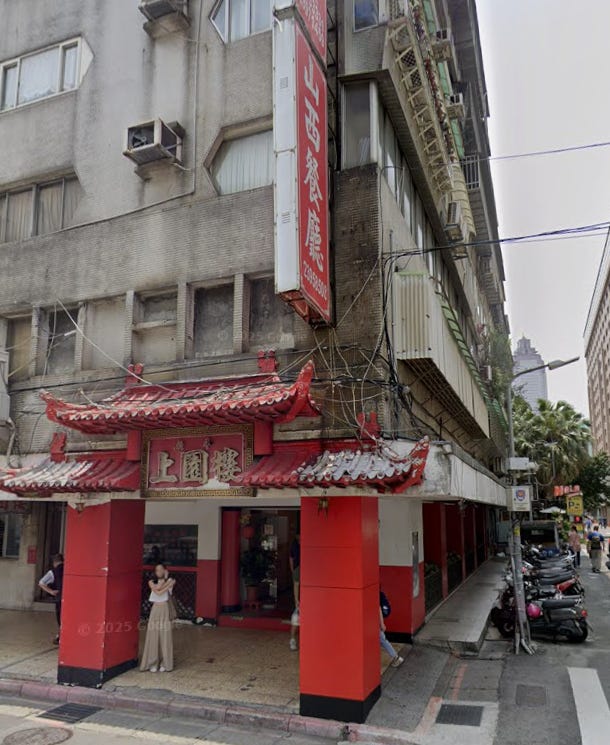
In particular, I think of two brothers who lived through this sort of dissonance: Carsun Chang and Kia-ngau Chang.
Carsun Chang (Zhang Junmai 张君劢), known as the “father of Taiwan’s modern constitution,” was definitely a dreamer. As a third-party intellectual leader between the CCP and the KMT, he had been persistently pushing for the promulgation of a proper, Jeffersonian-inspired constitution throughout the Republican period.
Most people assume that Sun Yat-sen is the main originator of Taiwan’s political system. However, not only had Sun never actually drafted a constitutional document before he had died, but subsequent attempts to reconcile his broad political writing with legal implementation only resulted in a couple unimplemented drafts. Following Sun’s idea of a period of “political tutelage,” the KMT government created an organizational pseudo-structure of a government based on these drafts while keeping ultimate authority within the party executive committee.
As Chiang Kai-shek was increasingly cemented as the Republic’s paramount leader, worries over if China would ultimately promulgate a constitution mounted. However, following on the heels of the surrender of Japan, Carsun would get his chance.
Called in the wake of foreign and domestic pressure on the eve of the civil war’s resurgence, Carsun was tasked to head a multiparty constituent assembly to advise changes to the constitutional draft, bargain compromises, and ultimately author the constitution that would be voted upon by the National Assembly.
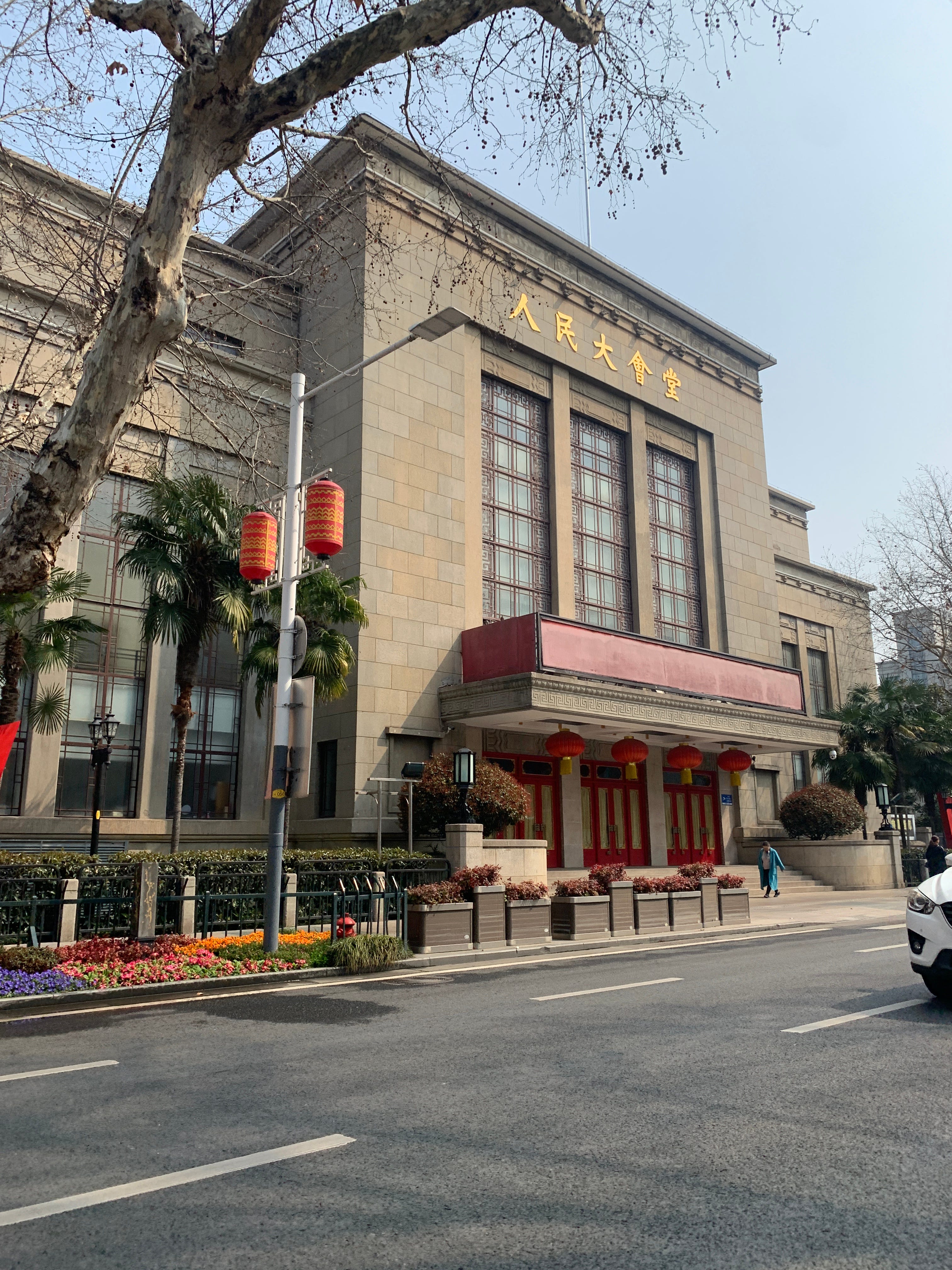
During these sessions, Carsun gave eleven speeches, where he analyzed various constitutions around the world from the US to Switzerland, exploring the ideals, the shortcomings, and his proposed solutions to uniquely suit China’s case. Many of his warnings and criticisms echo concerns we hold today, including the tension between democratic representativeness in a functional government and a massive population, the struggle for rule of law, and the fear of executive over-reach instilled from Chiang Kai-shek’s reign.
Importantly, in his last speech, he calls upon the members of the assembly to cooperate at this crossroads in China’s destiny: Including the Beiyang period, China has tried a total of four times to promulgate a working constitution, all of which have degenerated into dictatorship. Now, China is not only at the risk of sliding back into authoritarianism but is again on the brink of another war. Carsun beseeches the assembly members, if they and their respective parties don’t work together to build this dream of peace and democracy, then this constitution will become yet another piece of useless paper (废纸).
Carsun Chang was often derided as a naive idealist during his time, and in hindsight we can really see why. Although the constitution was ultimately stamped by the National Assembly, negotiations broke down, the Chinese Civil War resumed, martial law was declared, and Taiwan remained a dictatorship for 38 years.
However, what Carsun couldn’t have seen beyond his life was the fact that his version of the ROC constitution would serve as the foundational base for Taiwan’s democracy today.
Although the general outline of the constitution definitely still draws from Sun’s “Five Power Constitution” theory, the actual implementation and putting democratic ideals to paper was only realized by Carsun Chang, who envisioned a compromised system of government between Sun Yat-sen’s “Five Power Constitution,” the US’s three branch division of powers, and the UK’s cabinet empowered government. Of course, there still are pitfalls, like the National Assembly degenerating into a partisan tool, the stalling of Constitutional Court justice appointments, the Control Yuan originally holding too much power over appointments, and the current physical deadlock between the premier and the Legislative Yuan, but the mixture of ideas inside combining Chinese traditional institutions with Western balances of power have still led to one of the most active and vibrant democratic experiments in the world.
Carsun’s brother, Kia-ngau, was deeply familiar that even policies with the best intentions can have the tricky implementations and unforeseen shortcomings.
Chang Kia-ngau was originally the head of the largest private bank in the 1920s, the Bank of China. After the Northern Expedition nominally unified the Republic in 1927, he would help finance the creation of the Central Bank of China, later serving as its vice-governor and the Republic’s transportation minister through the war. After the Japanese surrender in 1945, he would be appointed the Economic Commissioner for Manchuria as the KMT government looked towards postwar reconstruction of factories and railways, and he would also rise to be the central bank’s governor in 1947.
As probably apparent, Kia-gnau had to satisfy much more beyond the classic dual mandate: He fought to keep the central bank independent, shore up a war economy beset by internal and external foes, catalyze industry in the interior of rural China, and satisfy a government asking for increasing funds for the military extracted from a decreasing portion of productive land. These pressures were mounting all the while the Republican financial system was trying to “tame the beast of inflation” and later lead postwar reconstruction of Japanese factories in Manchuria.
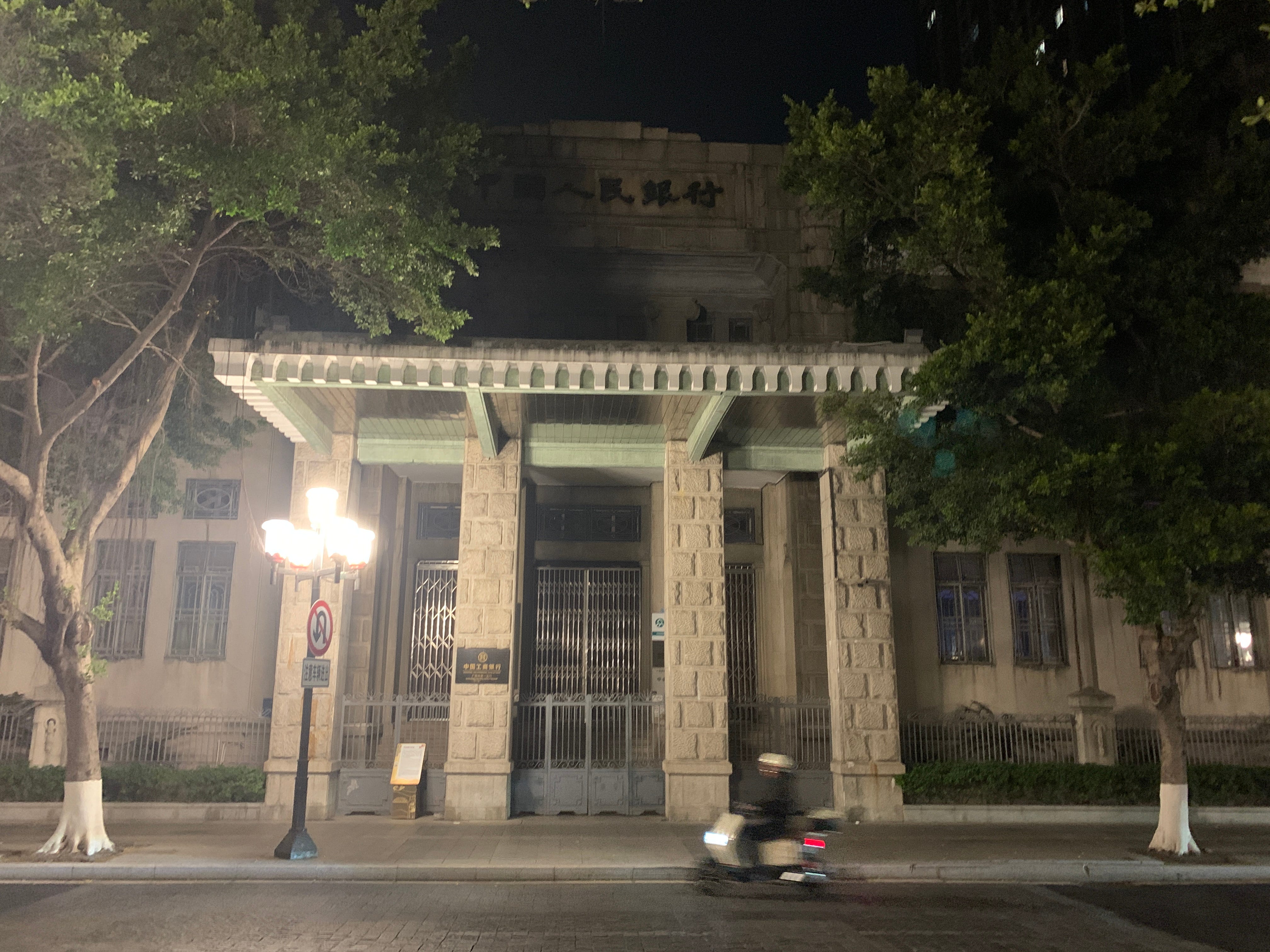
Despite the wartime government’s reputation for corruption, as the head of the Bank of China, Kia-ngau later would lecture on the wartime economic, monetary, and fiscal policies the ROC undertook to try and combat inflation. Often, these were well-intentioned and intended to alleviate the burden of the general population, such as the easy credit policy to jumpstart small businesses, the sales of US dollar-backed bonds, and the attempt at state monopolization of consumer goods to control prices and generate state revenue (following an extensive study of successful Japanese economic strategy during the Russo-Japanese War). However, due to external invasion, the military needs of the war economy, and the unevenness of administrative capacity these policies ultimately failed and often opened the door for profiteering elites who knew how to exploit the system.
Kia-ngau was even tasked post-war with handling the economic recovery of Manchuria and its industrial factories abandoned during the Japanese and subsequent Soviet withdrawals. However again, the easy credit to incentivize factory recovery, the glut of aggregate demand built up over the war, the return to the high velocity marketplaces of the coastal cities, an ever-continuing expansion of debt, and the expectations of future scarcity proved too much as the military situation was falling apart in the Northeast. The result was the hollowing of factories for parts, hoarding of goods for speculation, a devaluation of the currency, capital flight, and ultimately hyper-inflation. The Republican economy that had barely survived the Japanese invasion could not withstand the continued military expenditure and public uncertainty from Communist victories, and in the final days the KMT began turning to brutish measures just to try to keep fixed prices stable.
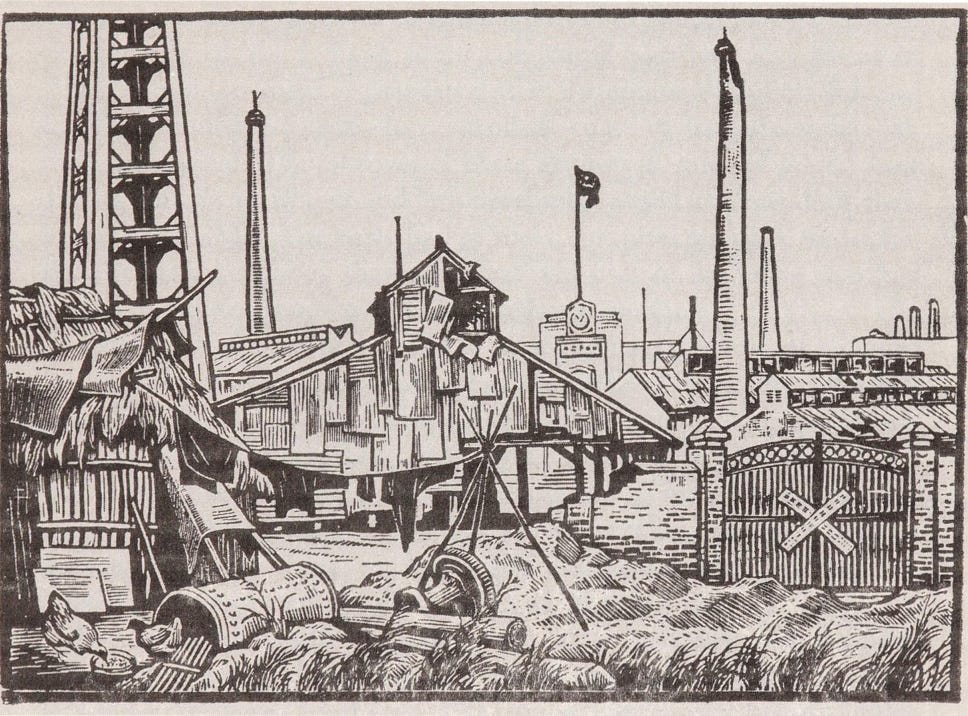
We always find this tension between the policies we dream about and the ugly realities of their implementation again and again.
This mismatch between policy and intent remains the core question of developmental economics, why credit programs, insurance policies, education, and healthcare interventions can often backfire if not implemented with nuance. We see this happening in Minnesota today, where idealistic grant policies from the government aren’t properly followed up upon or audited in a meaningful way, leading to corruption and wasted resources.
After the disastrous attempts at statistics in the Great Leap Forward discussed above, Mao launched the Cultural Revolution as a reactionary and clumsy attempt to rectify the leadership of ideological misguidance.
As it turns out, even if we agree on the ideology and the general policies themselves, the space in between can be messy: In the center of Zhengzhou today there stands a dual clock tower, built in 1971 to commemorate the first mass Chinese strike by railroad workers in 1923.
Besides the irony that proletariat workers were never truly the backbone of the Chinese revolution as in orthodox Communism, worker rights in today’s China are caught between strong protections on paper but repressive capacity of the courts and the state.
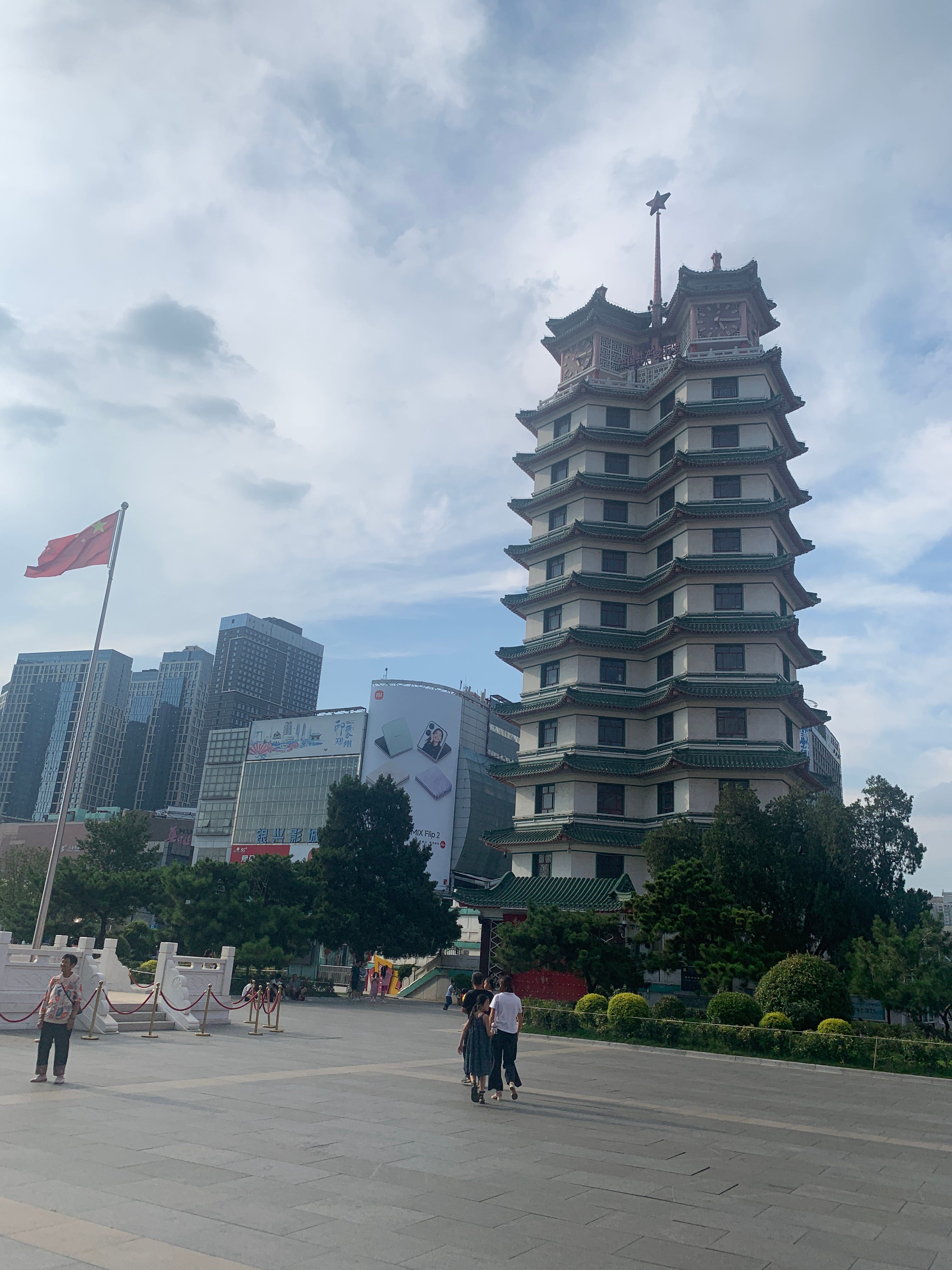
Contemporary Chinese don’t even care much for strikes, given the contemporary capitalist system, the lack of easy grassroots organizational capacity, and income growth during the Reform Era. And as satisfaction with income has risen, the annoyance with strikes’ shutdowns of service and disruptions has correspondingly risen. Now, even veteran communist members of the older generations feel inconvenienced when they visit a foreign country and public services are interrupted by strikes.
In the wake of 1949, intellectuals like Fu Ssu-nien who expounded the dangers of totalitarianism and radical change on mainland China also came to live under the autocratic rule in Taiwan, far away from their hometowns. Even Chiang Kai-shek’s diaries write and speak about a strong, democratic vision for China’s destiny, only to lose the mainland and spend the rest of his days on an island constantly fearful of Communist invasion.
This feeling of disconnect takes center stage in one of Pai Hsien-yung’s short stories from his collection “New Yorker 紐約客”, where he writes about the life of a Chinese expat in Manhattan. The main character initially fled the mainland in 1949 but has since experienced loss and hardship working in this completely foreign city. He reunites unexpectedly with a classmate who is visiting after the Cultural Revolution, asking about old friends and their exciting careers as builders of the nation post-liberation. However, he finds out that most of their old friends were prosecuted and beat down by the Red Guards, and that they too are struggling and battered by the waves that life throws at them. Failed, adrift, and alone, they part ways and continue their struggles, disillusioned by each other’s experiences.


Like those Chinese intellectuals and leaders who dreamed, failed, and lived in the spaces in between, contradiction is tension in flux.
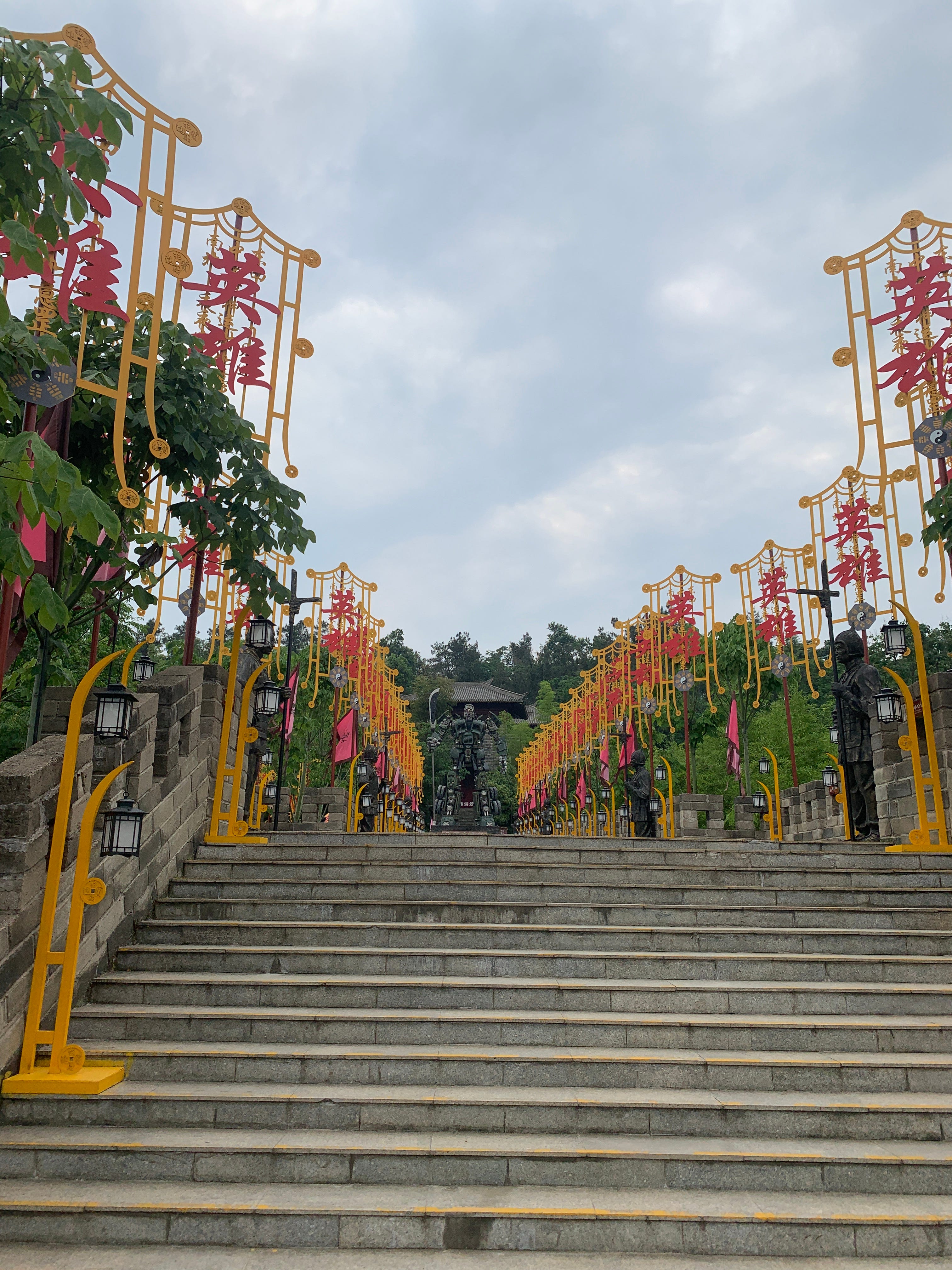
The lines between reality and truth, idea and practice, hope and despair, and what things are important versus what things aren’t blur the more we scrutinize ideas and policies, just like how fictionally constructed historical sites can develop their own kind of authenticity or constitutions of “useless paper” can later evolve and adapt to become the bedrock of a republic. However, what’s equally important is to not to lose sight of the nuanced and complex past that builds these ideas and the hope for a better future of what they can become.